

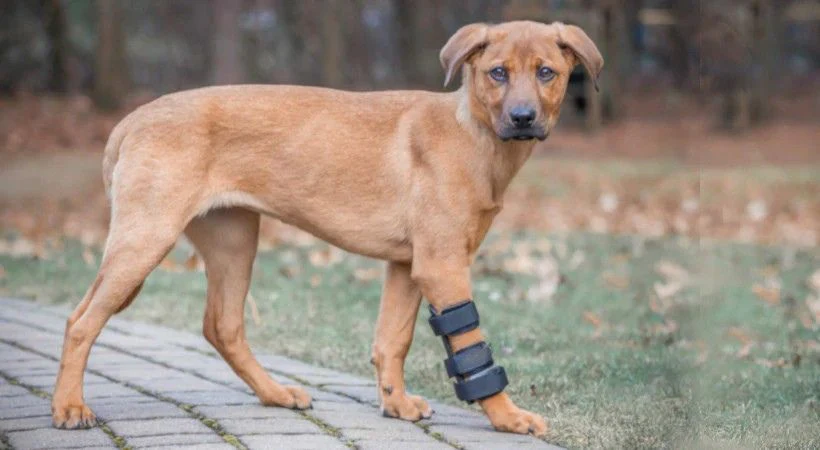
Some owners notice it immediately.
The dog was normal…
then suddenly starts limping during a walk.
No gradual change.
Just one moment everything is fine, the next step is not.
This often makes people think about a serious injury.
Sometimes the reason is much simpler.
What this can look like
You may notice your dog:
- begins limping during the walk
- stops and looks at the paw
- licks the same foot repeatedly
- refuses to continue walking
- walks better on soft ground than on pavement
The change is usually clear and sudden.
Why the paw matters first
The paw touches the ground every step.
Even a small irritation can change how the dog places the leg.
Dogs react quickly to discomfort in this area.
Owners often say:
“He was fine until a minute ago.”
That detail is useful.
Things worth checking calmly
Without forcing the leg, you may simply look for:
- something between the toes
- a damaged nail
- a small bleeding point
- swelling of one toe
- moisture from licking
You do not need to press or manipulate.
When to think beyond the paw
Sometimes nothing obvious is visible.
Consider looking closer if:
- limping continues after rest
- weight is avoided completely
- swelling appears higher on the leg
- behaviour changes
Sudden limping does not always stay local.
What owners should avoid
- do not pull strongly between the toes
- do not cut deep around the nail
- do not force walking
- do not give human medication
Gentle observation is enough.
Simple message to remember
Sudden limping often starts at ground level.
The paw is a common first place to look,
but not every problem will be visible.
What to do next
If limping continues, worsens, or you are unsure what you see, a calm discussion with your vet or independent advice can help clarify the situation.
About the author
Dragan Avramović, DVM
Independent advice in small animal surgery and orthopaedics.