

Some owners notice it in the evening.
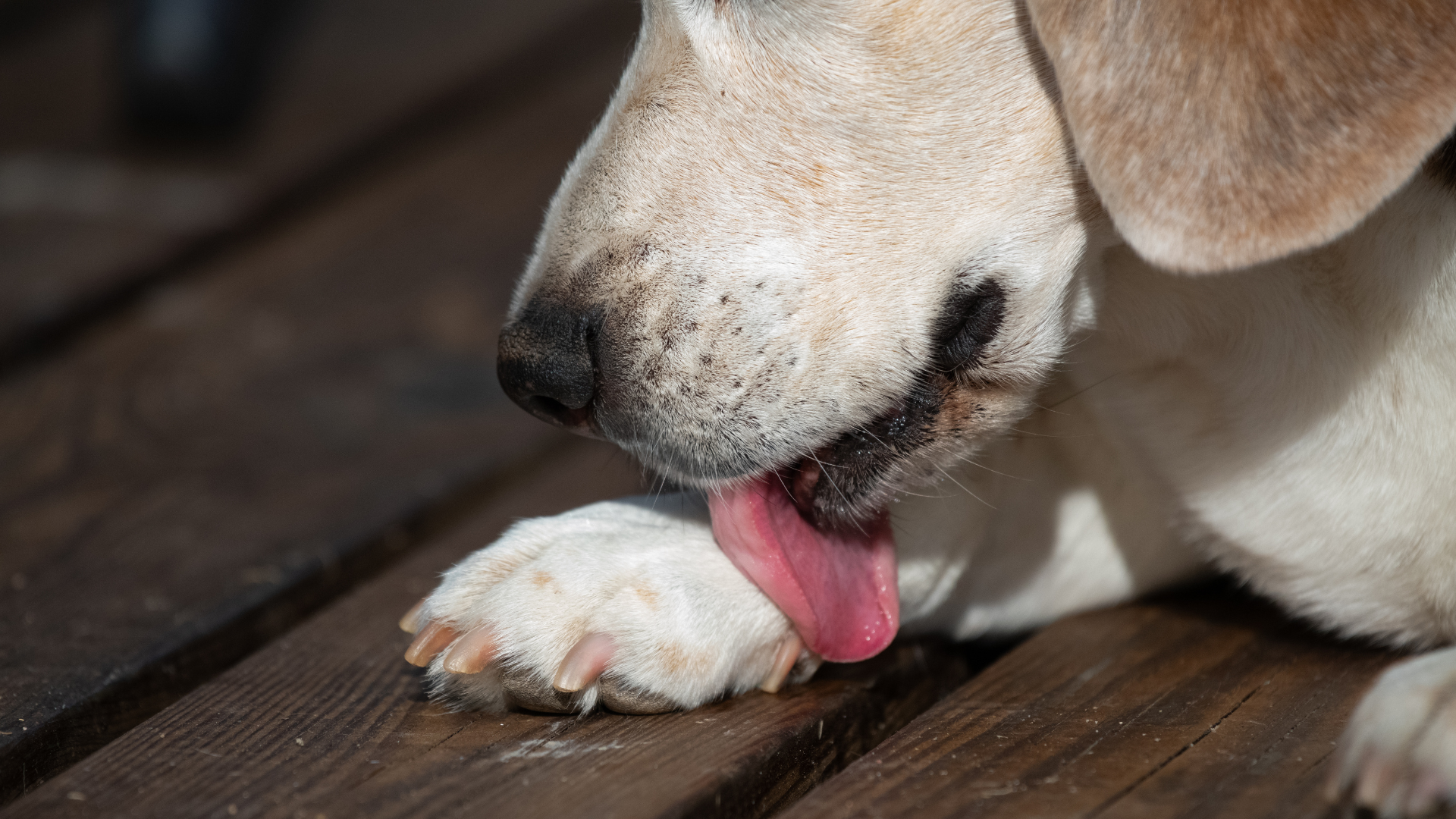
The dog lies down and starts licking the same paw.
Not once. Again and again.
At first it looks like grooming.
But it keeps returning to the same place.
What this can look like
You may see your dog:
- licking one paw repeatedly
- stopping during rest to lick
- chewing between the toes
- paying attention to one foot only
- walking normally most of the day
The movement may still look fine.
Why dogs focus on one paw
Dogs often react to small discomfort locally.
Instead of limping clearly,
they return to the area that bothers them.
Owners often say:
“He’s not lame, just licking.”
That detail is useful.
Things worth noticing
Pay attention if:
- it always involves the same paw
- licking starts after walks
- the area looks slightly darker or moist
- activity decreases slowly
- limping appears later
Behaviour sometimes appears before movement changes.
What this may suggest
Repeated attention to one paw can be linked to:
- local irritation
- sensitivity during weight bearing
- early movement discomfort
- the dog protecting the step
You do not need to identify the cause.
You only need to recognise the pattern.
When to think more about it
It is reasonable to look closer if:
- licking continues for days
- the skin changes colour
- swelling appears
- movement begins to change
Small local signs can precede clear lameness.
What owners should avoid
- do not repeatedly wash aggressively
- do not apply random creams
- do not ignore persistence
- do not give human medication
Gentle observation helps most.
Simple message to remember
Dogs do not always limp first.
Sometimes they show you the place before the step changes.
What to do next
If licking persists and you are unsure why, a calm discussion with your vet or independent advice can help clarify the situation.
About the author
Dragan Avramović, DVM
Independent advice in small animal surgery and orthopaedics.