

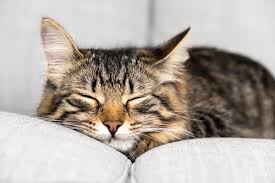
Some owners begin to notice that their cat sleeps more than before.
At first, this may not seem unusual.
Cats often spend many hours resting during the day.
But sometimes the change is not only about sleep.
The cat may simply move less.
Owners often say:
“She used to walk around the house more.”
“Now she mostly stays in the same place.”
That observation matters.
What this can look like
You may notice that your cat:
- sleeps longer than before
- changes resting places less often
- walks around the house less frequently
- shows less interest in moving from room to room
- spends more time staying in one comfortable place
These changes may appear slowly.
Why activity sometimes changes
Cats are usually very good at hiding discomfort.
Instead of showing obvious pain,
they often adjust their behaviour.
Moving less can simply mean the cat is trying to avoid movements that feel uncomfortable.
Owners often say:
“She seems comfortable when resting, but she moves less.”
That detail is important.
Things worth noticing
Pay attention if:
- sleeping time gradually increases
- the cat walks around the house less
- resting periods become longer
- activity during the day becomes lower
- other movement changes appear as well
Small changes in daily behaviour often connect.
What this may suggest
Sleeping more and moving less may sometimes be linked to:
- reduced comfort during movement
- stiffness affecting the spine or joints
- reduced flexibility of the body
- general discomfort when changing position
You do not need to identify the cause.
Simply noticing the change is useful.
When to think more about it
It is reasonable to look closer if:
- the change continues for several days
- the cat becomes noticeably less active
- activity gradually decreases
- other movement changes appear
Repeated patterns rarely happen by chance.
What owners should avoid
- do not assume this is only normal ageing
- do not force the cat to move
- do not ignore gradual changes
- do not give human medication
Observation is often the best first step.
Simple message to remember
Cats naturally rest a lot.
But if a cat begins to sleep more and move less than before,
the body may be signalling discomfort.
What to do next
If the change continues or becomes more noticeable, discussing the situation with your vet or seeking independent advice can help clarify what may be happening.
About the author
Dragan Avramović, DVM
Independent advice in small animal surgery and orthopaedics.