

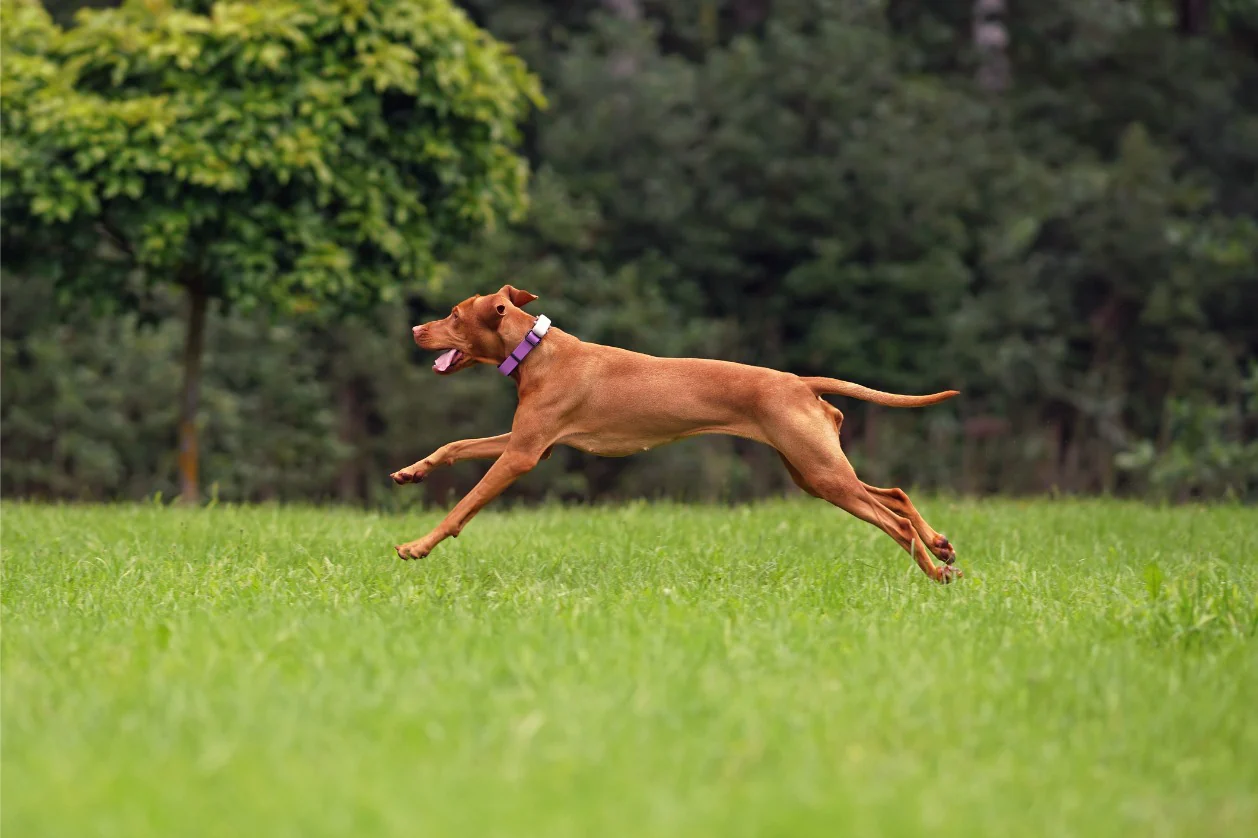
Some owners notice it during play.
The dog runs normally…
then suddenly moves both back legs together, like a rabbit.
It may happen only when running fast.
Sometimes only on grass.
Sometimes only after warming up.
Many dogs still seem happy and active.
What this can look like
You may see your dog:
- push off with both back legs at the same time
- run normally at slow speed but change when faster
- shorten the stride behind
- avoid full stretching of the back legs
- sit down after running
- slow down earlier than before
At first, it may appear only occasionally.
Why this movement matters
Running normally uses each back leg separately.
When a dog moves them together,
it often means the movement behind is being simplified.
Owners often say:
“He runs fine, just a bit oddly.”
That detail is important.
Changes worth noticing
Pay attention if:
- it appears more often over time
- jumping becomes less confident
- stairs start to change
- rising after rest is slower
- one back leg seems less used
Patterns tend to connect.
What this may suggest
This type of running can be linked to:
- reduced comfort in full movement
- reduced extension of the back legs
- reduced stability behind
- the dog choosing an easier motion
You do not need to identify the cause.
You only need to notice the pattern.
When to think more about it
It may be reasonable to reflect further if:
- the movement becomes frequent
- running stops earlier than before
- your dog avoids fast play
- other movement changes appear
Small changes often join together.
What owners should avoid
- do not force running
- do not test it repeatedly
- do not ignore gradual change
- do not give human pain medication
Observation tells more than pushing activity.
Simple message to remember
Running with both back legs together is not random.
The dog is adapting the movement.
What to do next
If this pattern continues and you are unsure what it means, a calm discussion with your vet or independent advice can help you understand the next step.
About the author
Dragan Avramović, DVM
Independent advice in small animal surgery and orthopaedics.