
Some owners notice it suddenly.
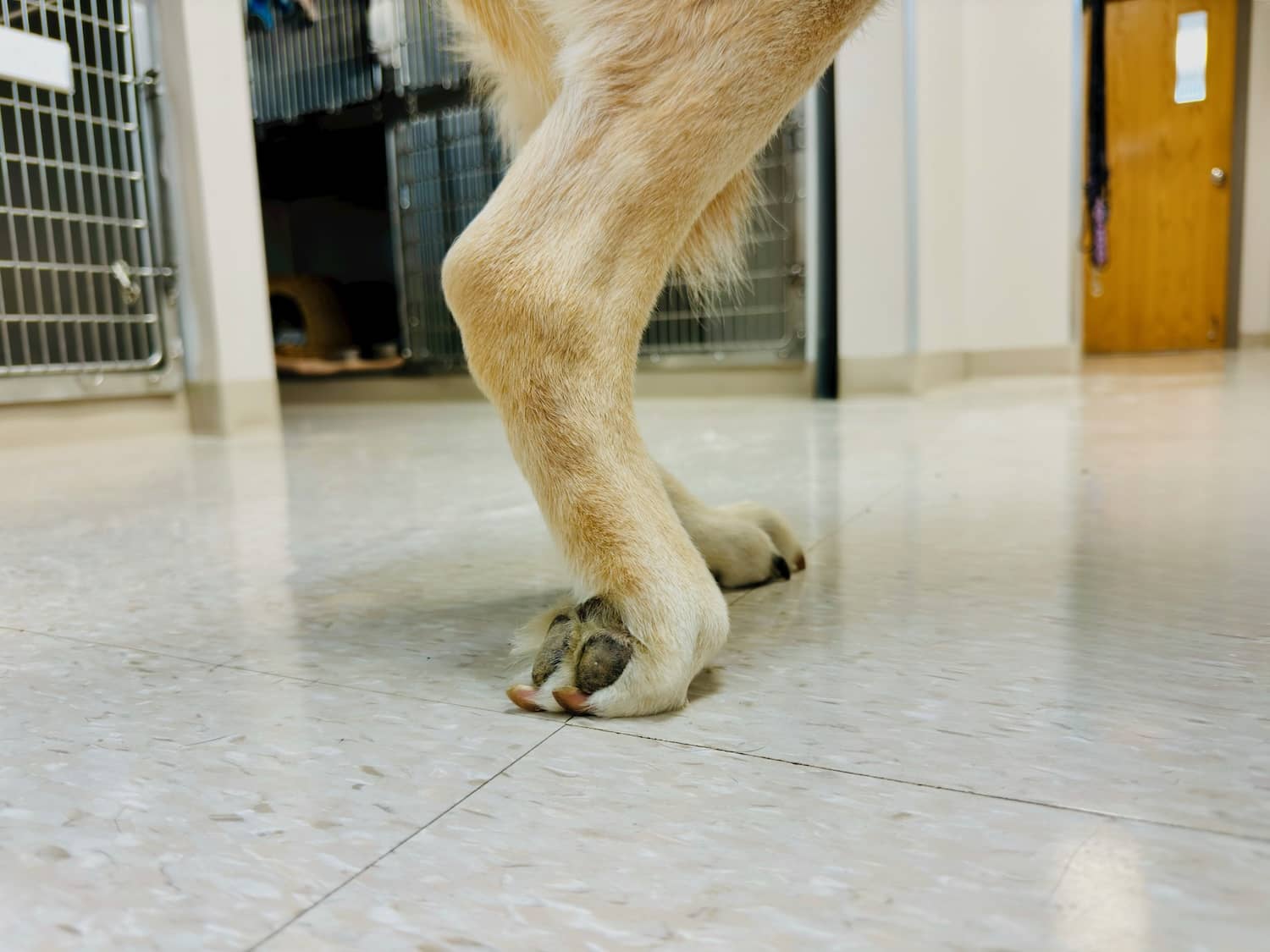
While standing, the paw is not flat on the ground.
The dog steps on the top of the paw for a moment… then corrects it.
Others notice a brief stumble during walking.
It may happen once.
Then again days later.
What this can look like
You may see your dog:
- place the paw upside down briefly
- drag the paw before correcting it
- trip on uneven ground
- stand awkwardly for a second
- wear the top of the nails
- walk normally most of the time
Many dogs still seem active and willing to move.
Why this movement matters
Walking is not only strength.
It also depends on position awareness.
The body needs to know where the paw is placed.
Owners often say:
“He doesn’t seem painful — just clumsy.”
That detail is important.
Changes worth noticing
Pay attention if:
- it repeats over days
- it happens when turning
- back legs look less coordinated
- nails wear unevenly
- your dog slips more often
Small signs often appear before larger ones.
What this may suggest
This pattern can be linked to:
- reduced awareness of paw position
- reduced control of the step
- weakness in movement
- balance changes
You do not need to name the cause.
You only need to recognise the pattern.
When to take it more seriously
It is reasonable not to ignore it if:
- the paw stays folded longer
- the frequency increases
- more than one leg is involved
- walking becomes uncertain
- the change appears suddenly
Some movement changes deserve earlier attention.
What owners should avoid
- do not assume it is laziness
- do not test the paw repeatedly
- do not force exercise
- do not give human pain medication
Calm observation helps more than reaction.
Simple message to remember
If the paw occasionally turns over,
the body is not placing the step normally.
Even if the dog walks afterwards, the sign is meaningful.
What to do next
If you notice this pattern and it repeats, discussing it with your vet or seeking advice sooner rather than later can help you understand the situation clearly.
About the author
Dragan Avramović, DVM
Independent advice in small animal surgery and orthopaedics.