

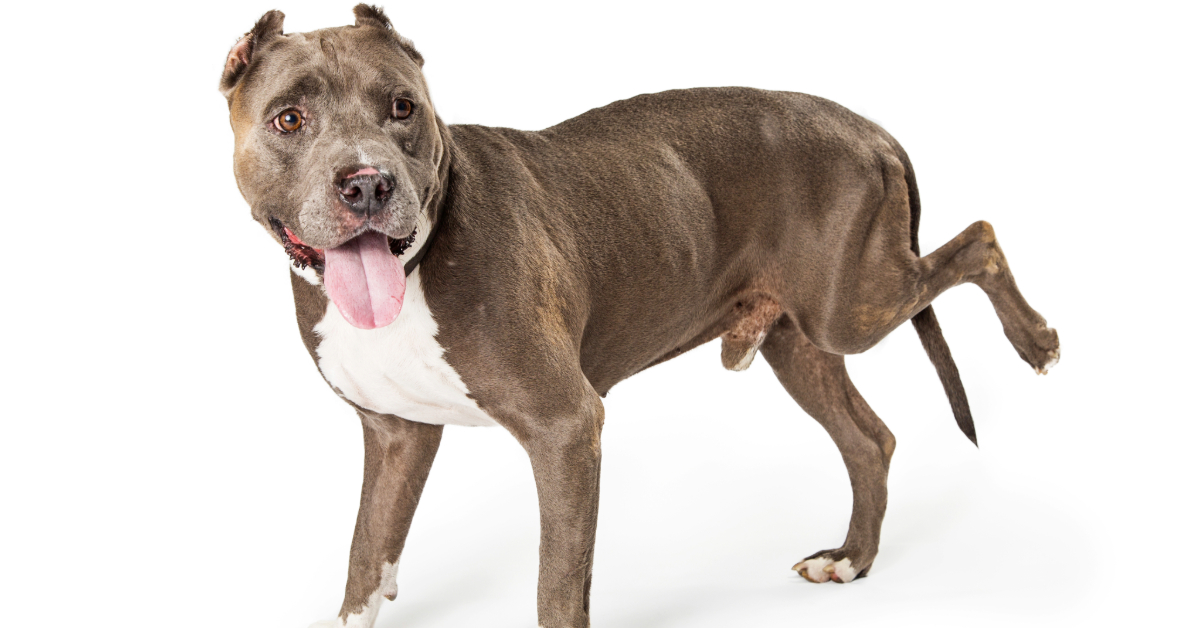
Some changes in dogs happen slowly.
Owners may not notice them at first.
Then one day, something looks different in the back legs.
Owners often say:
“His back legs look thinner.”
“He seems to be losing muscle.”
“The back end looks weaker than before.”
That observation matters.
What this can look like
You may notice your dog:
- losing muscle around the thighs
- looking narrower in the back end
- having less muscle definition in the rear legs
- standing differently than before
- becoming weaker during movement or exercise
Sometimes the change affects one leg more than the other.
Sometimes both sides change gradually over time.
Why this is important
Muscles are closely linked to movement and normal body function.
When a part of the body is not being used normally,
muscle mass can slowly decrease.
Owners often say:
“He still walks, but the back legs look different.”
That detail is important.
Things worth noticing
Pay attention if:
- one leg looks thinner than the other
- the back end becomes less muscular over time
- your dog tires more easily
- jumping, stairs, or rising become harder
- other movement changes appear as well
Changes in muscle shape often develop gradually.
What this may suggest
Reduced muscle mass in the back legs may sometimes be linked to:
- reduced use of a limb
- discomfort affecting normal movement
- weakness involving the muscles or nervous system
- long-term changes in mobility or balance
In some cases, the body adapts slowly before obvious limping appears.
You do not need to identify the cause.
Noticing the pattern is enough.
When to think more about it
It is reasonable to look closer if:
- the muscle loss continues over time
- movement becomes weaker or slower
- your dog avoids activity
- one side becomes noticeably different
Changes in muscle mass usually happen for a reason.
What owners should avoid
- do not assume it is simply ageing
- do not force exercise suddenly
- do not ignore gradual body changes
- do not give human medication
Careful observation often provides valuable information.
Simple message to remember
If your dog’s back legs look thinner than before,
the body may not be using those muscles normally.
Even gradual changes in muscle shape can matter.
What to do next
If the pattern continues or becomes more noticeable, discussing the changes with your vet or seeking independent advice can help clarify what may be happening.
About the author
Dragan Avramović, DVM
Independent advice in small animal surgery and orthopaedics.