

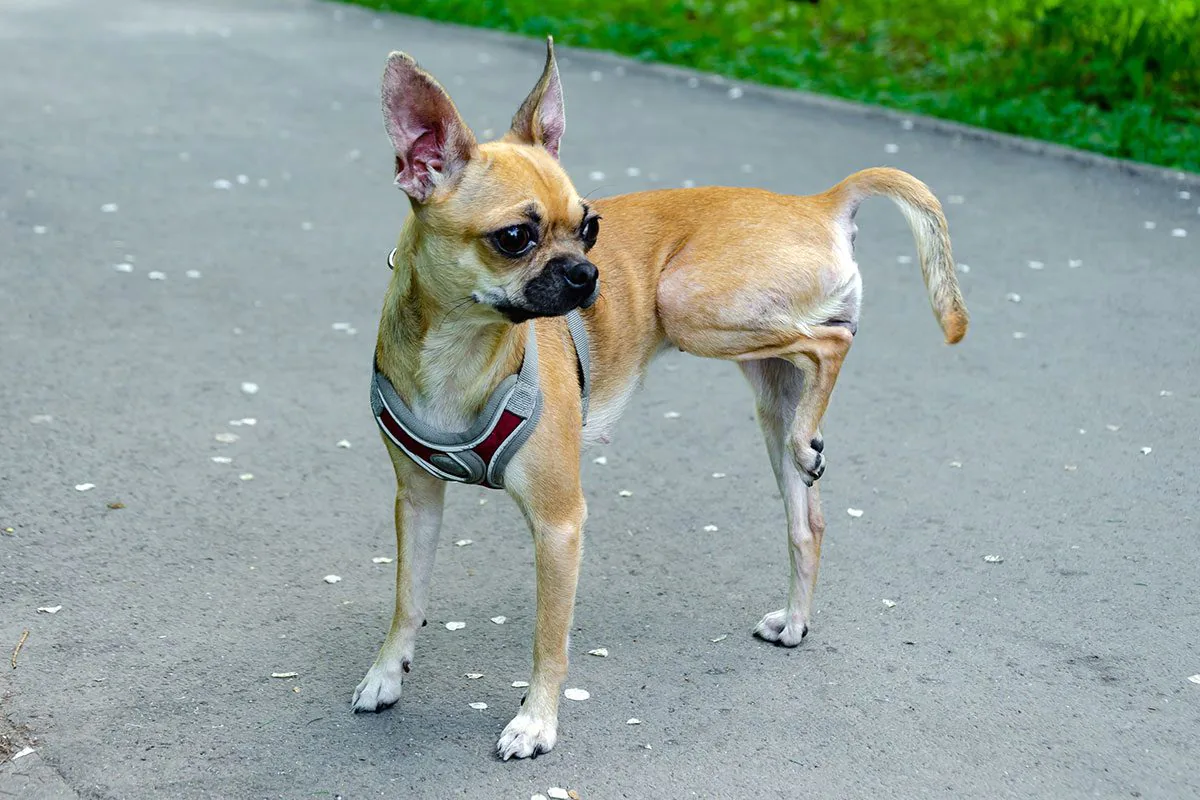
Some dogs walk in a way that looks unusual from behind.
The legs do not move in a straight line.
Owners often say:
“The back legs cross over.”
“He walks strangely from behind.”
“The legs sometimes move into each other.”
That observation matters.
What this can look like
You may notice your dog:
- crossing the back legs during walking
- placing one hind leg too close to the other
- losing a straight walking pattern
- looking unsteady from behind
- occasionally stepping on its own feet
Sometimes the change is mild.
Sometimes it becomes easier to notice over time.
Why this is important
Normal walking requires coordination, balance, and body control.
The nervous system, muscles, joints, and spine all work together to keep movement organised.
If this control changes,
the walking pattern may also change.
Owners often say:
“He still walks, but something looks wrong behind.”
That detail is important.
Things worth noticing
Pay attention if:
- the crossing happens repeatedly
- your dog appears less coordinated
- balance looks different during walking
- the back end sways or looks unstable
- other movement changes appear as well
Small coordination changes can become more obvious over time.
What this may suggest
Crossing of the back legs during walking may sometimes be linked to:
- changes affecting coordination or balance
- weakness involving the hind limbs
- altered control of movement
- reduced awareness of limb position during walking
In some cases, movement changes may appear before obvious weakness develops.
You do not need to identify the cause.
Noticing the pattern is enough.
When to think more about it
It is reasonable to look closer if:
- the crossing becomes more frequent
- walking looks increasingly unstable
- your dog starts stumbling or dragging the feet
- other changes in posture or movement appear
Changes in coordination usually happen for a reason.
What owners should avoid
- do not force difficult exercise
- do not repeatedly test the walking pattern
- do not ignore gradual changes
- do not give human medication
Calm observation often provides the most useful information.
Simple message to remember
If your dog’s back legs cross during walking,
the body may be struggling to control movement normally.
Even subtle coordination changes can matter.
What to do next
If the pattern continues or becomes more noticeable, discussing the changes with your vet or seeking independent advice can help clarify what may be happening.
About the author
Dragan Avramović, DVM
Independent advice in small animal surgery and orthopaedics.