

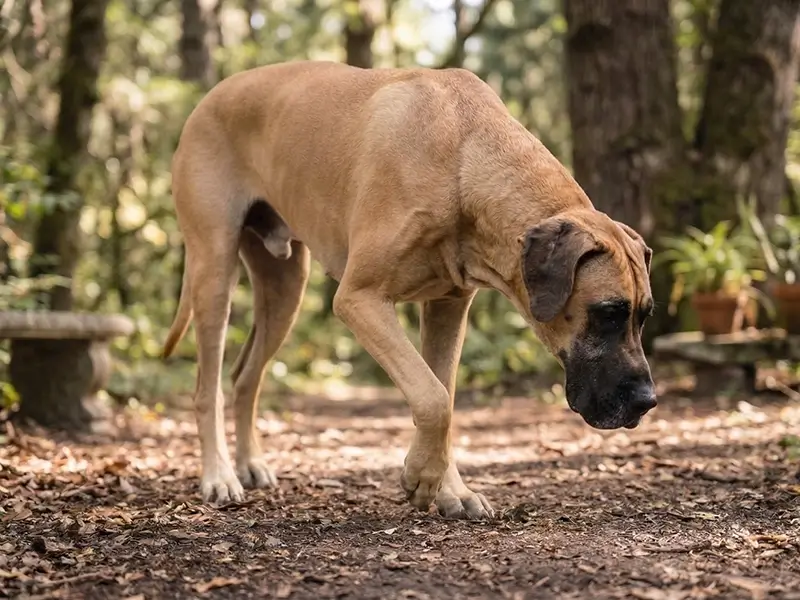
Some dogs walk differently in a very specific way.
Not in their legs — but in their head and neck.
Owners often say:
“He walks with his head down.”
“He doesn’t lift his head like before.”
“He looks careful when he moves.”
That observation matters.
What this can look like
You may notice your dog:
- walking with the head held lower than usual
- keeping the neck stiff
- avoiding lifting the head
- moving more slowly and carefully
- hesitating before walking or turning
Sometimes the body looks normal.
But the head position is different.
Why this is important
The position of the head is not random.
Dogs adjust how they hold their head to protect themselves.
Lowering the head can reduce movement in the neck and spine.
Owners often say:
“He walks normally, but something looks different.”
That detail is important.
Things worth noticing
Pay attention if:
- the head stays low during walking
- your dog avoids looking up
- movement becomes slower or cautious
- the neck looks stiff
- the change appears suddenly or gradually
Small postural changes can carry important information.
What this may suggest
Holding the head low may sometimes be linked to:
- discomfort in the neck
- sensitivity along the spine
- reduced ease of movement in the upper body
- protective posture due to pain or instability
In some cases, it may also be related to how the nervous system controls movement.
You do not need to identify the cause.
Noticing the pattern is enough.
When to think more about it
It is reasonable to look closer if:
- the position does not return to normal
- your dog avoids normal movement
- other changes appear (slower walking, stiffness, hesitation)
- the behaviour continues over time
Changes in posture rarely happen without a reason.
What owners should avoid
- do not force the head to move
- do not test the neck repeatedly
- do not ignore the change
- do not give human medication
Calm observation is often the most useful first step.
Simple message to remember
If your dog walks with its head lower than usual,
the body may be trying to protect the neck or spine.
Even if the legs look normal, the movement may not be.
What to do next
If the change continues or becomes more noticeable, discussing the situation with your vet or seeking independent advice can help clarify what may be happening.
About the author
Dragan Avramović, DVM
Independent advice in small animal surgery and orthopaedics.