

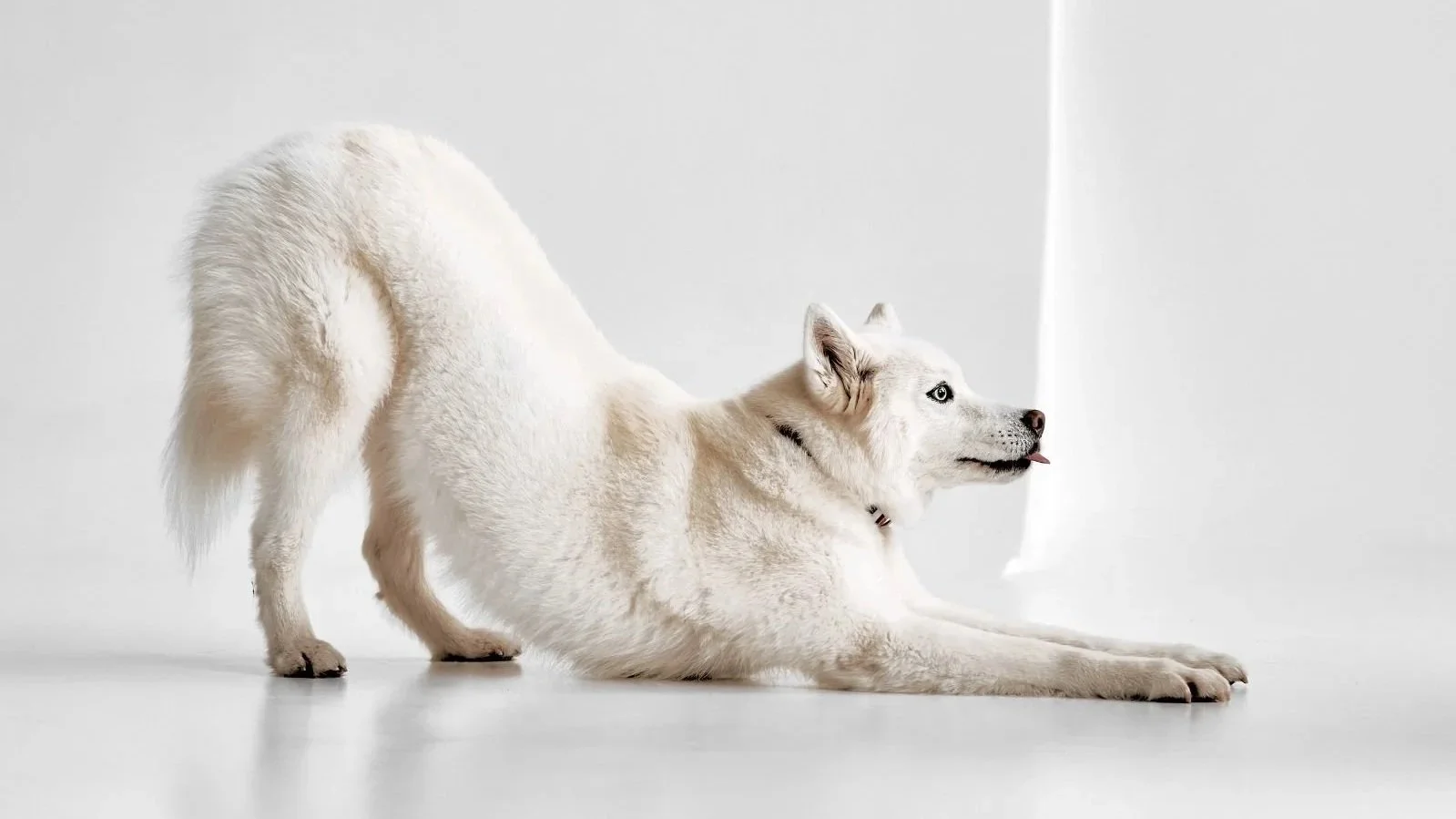
Some dogs stretch from time to time.
That is normal.
But sometimes owners notice that stretching happens more often than before.
Owners often say:
“He keeps stretching.”
“He stretches again and again.”
“He lowers the front of his body and stays like that.”
That observation matters.
What this can look like
You may notice your dog:
- stretching more frequently than usual
- lowering the front part of the body while keeping the back end raised
- repeating the same stretching movement several times
- stretching during rest, not just after sleep
- combining stretching with restlessness or repositioning
Sometimes it looks like a normal stretch.
But the frequency is different.
Why this is important
Stretching is a natural movement.
But repeated or unusual stretching is not always random.
Dogs may use this movement to relieve discomfort or tension in the body.
Owners often say:
“He didn’t do this before.”
That detail is important.
Things worth noticing
Pay attention if:
- stretching becomes more frequent
- it appears during the day, not only after rest
- your dog repeats the same movement several times
- the body looks tense during the stretch
- other changes appear at the same time
Patterns often tell more than a single movement.
What this may suggest
Increased stretching may sometimes be linked to:
- discomfort in the body
- tension in muscles or along the spine
- difficulty finding a comfortable position
- changes affecting normal movement
You do not need to identify the cause.
Noticing the pattern is enough.
When to think more about it
It is reasonable to look closer if:
- stretching happens often and repeatedly
- your dog seems unsettled
- other changes appear (movement, behaviour, rest)
- the pattern continues over time
Changes that repeat usually have a reason.
What owners should avoid
- do not assume it is just normal stretching
- do not ignore repeated patterns
- do not force movement
- do not give human medication
Calm observation is often the most helpful first step.
Simple message to remember
If your dog stretches more than usual,
the body may be trying to deal with discomfort.
Even a normal movement can carry a different meaning when it repeats.
What to do next
If the pattern continues, discussing the changes with your vet or seeking independent advice can help clarify what may be happening.
About the author
Dragan Avramović, DVM
Independent advice in small animal surgery and orthopaedics.