

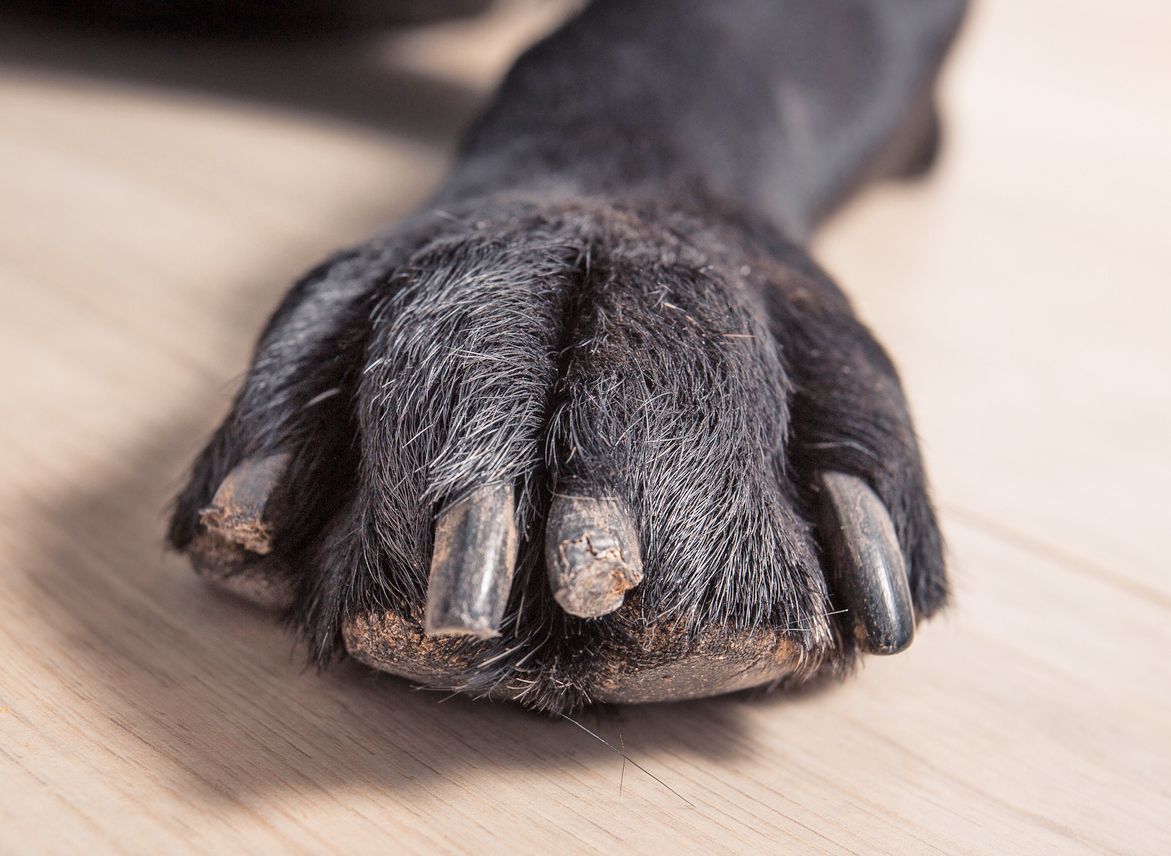
Some owners notice it by accident.
While trimming nails, one looks different.
Shorter. Flatter. Sometimes rough at the end.
The others look normal.
It does not seem important at first.
But nails often show how a dog uses a leg.
What you may notice
You may see:
- one nail shorter than the rest
- one nail worn on the top surface
- small scraping sounds on hard floors
- a faint dragging step
- no clear limping
Many dogs still walk and run normally.
Why nails can change first
Each step should land in a similar way.
If a paw is placed differently,
the nail touches the ground more than it should.
Owners often say:
“I hear a light tapping sound when he walks.”
That detail matters.
Changes worth noticing
Pay attention if:
- the same nail keeps wearing down
- the paw sometimes turns slightly
- your dog slips more often
- the step looks uneven from behind
- back feet look less coordinated
Small changes repeat before bigger ones appear.
What this may suggest
Uneven nail wear can be linked to:
- altered paw placement
- reduced control of the step
- weakness in movement
- change in balance
You do not need to identify which one.
You only need to notice that the step is different.
When to think more about it
It may be reasonable to reflect further if:
- the nail keeps changing shape
- scraping sounds increase
- movement looks less precise
- other legs begin to change
- the pattern continues over weeks
Quiet signs are still signs.
What owners should avoid
- do not ignore repeated changes
- do not trim only that nail shorter
- do not force longer walks
- do not give human pain medication
Observation helps more than correction.
Simple message to remember
Nails wear down for a reason.
If one nail keeps changing,
the step behind it has changed too.
What to do next
If the change continues and you are unsure what it means, a calm discussion with your vet or independent advice can help clarify the situation.
About the author
Dragan Avramović, DVM
Independent advice in small animal surgery and orthopaedics.