

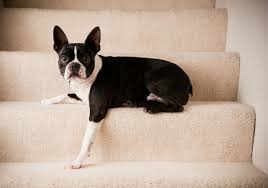
Many owners notice it quietly.
Their dog pauses at the bottom of the stairs.
Hesitates.
Or simply chooses not to climb them anymore.
It is easy to think, “Maybe he just doesn’t feel like it.”
Sometimes that is true.
Sometimes it is a sign that movement is no longer comfortable.
This guide helps you notice when avoiding stairs may mean more than preference.
What owners often see
You may notice that your dog:
- stops before climbing
- climbs more slowly than before
- uses only one back leg to push up
- refuses to go upstairs but comes down
- avoids stairs after rest
- looks stiff before starting
- hesitates but eventually manages
These changes often appear gradually.
Why stairs reveal problems early
Stairs require:
- strength
- balance
- joint stability
- confidence in movement
If something is not working smoothly, stairs are often one of the first activities to show it.
A dog may still walk normally on flat ground,
but struggle when the effort increases.
Changes worth paying attention to
Take closer notice if:
- the hesitation becomes regular
- your dog turns back instead of trying
- back legs look weaker when pushing up
- your dog shifts weight to one side
- movement looks careful or guarded
- reluctance slowly increases over weeks
Gradual avoidance is still change.
What this can sometimes indicate
Avoiding stairs may be linked to:
- discomfort in a joint
- reduced stability
- changes in strength
- reduced confidence in movement
You do not need to identify the cause.
You only need to recognise that something has changed.
When it is worth reflecting further
It may be reasonable to consider further discussion if:
- avoidance becomes consistent
- other activities also decrease
- stiffness appears after rest
- your dog struggles to stand
- limping begins to appear
- changes progress over time
Observation comes first. Decisions follow calmly.
What owners should avoid
- do not assume it is simply stubborn behaviour
- do not force your dog up the stairs
- do not suddenly increase exercise
- do not give human pain medication
Quiet observation is more useful than reaction.
Simple message to remember
If your dog starts avoiding stairs, it is worth noticing.
Preference changes are normal.
Repeated hesitation often is not.
You do not need to rush.
You only need to recognise the pattern.
What to do next
If stair avoidance continues and you are unsure what it means, a calm conversation with your vet or independent advice can help you understand your options, in your own time.
About the author
Dragan Avramović, DVM
Independent advice in small animal surgery and orthopaedics.