

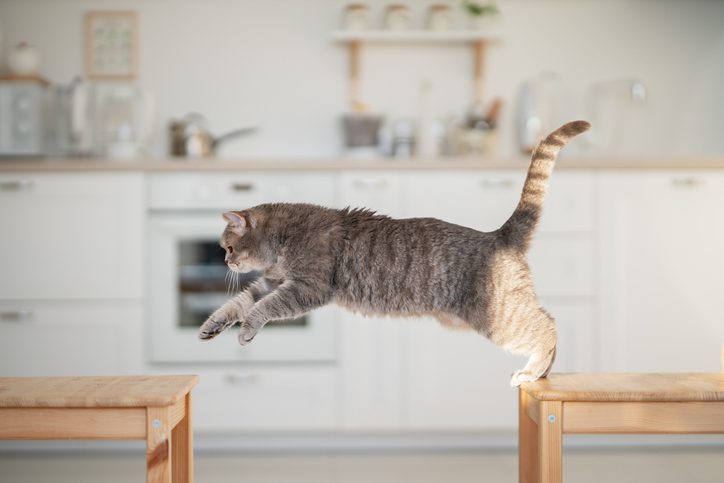
Some owners notice a small pause before their cat jumps.
The cat approaches a chair, a table, or a windowsill…
then stops for a moment.
Sometimes the cat looks up, thinks, and only then jumps.
Other times it turns away and chooses another place.
At first, it may seem like hesitation or mood.
But changes around jumping can reveal how comfortable movement feels.
What this can look like
You may notice your cat:
- pausing before jumping
- choosing lower places than before
- jumping in two steps instead of one
- using furniture to climb gradually
- missing a jump that used to be easy
These changes often appear slowly.
Why jumping can reveal movement changes
Jumping requires strength, balance, and flexible movement of the spine and hind limbs.
If that movement becomes uncomfortable or less stable,
cats often adjust the way they jump.
Owners often say:
“She used to jump up easily, now she stops and looks first.”
That observation matters.
Things worth noticing
Pay attention if:
- your cat jumps less often
- hesitation appears more frequently
- the jump looks shorter or weaker
- landing becomes careful
- activity around climbing changes
Small movement changes can appear before obvious signs.
What this may suggest
Hesitation before jumping may be linked to:
- reduced strength in the hind limbs
- reduced flexibility of the spine
- discomfort during movement
- reduced confidence in balance
You do not need to identify the cause.
Simply noticing the change is useful.
When to think more about it
It is reasonable to look closer if:
- hesitation appears repeatedly
- your cat avoids jumping altogether
- climbing behaviour changes
- general activity becomes lower
Patterns over time are important.
What owners should avoid
- do not force your cat to jump
- do not repeatedly test the jump
- do not ignore gradual changes
- do not give human medication
Observation is often the most helpful first step.
Simple message to remember
Jumping is a natural movement for cats.
If a cat begins to hesitate before jumping,
the body may be signalling discomfort.
What to do next
If this change continues or becomes more noticeable, a calm discussion with your vet or independent advice can help clarify what may be happening.
About the author
Dragan Avramović, DVM
Independent advice in small animal surgery and orthopaedics.