

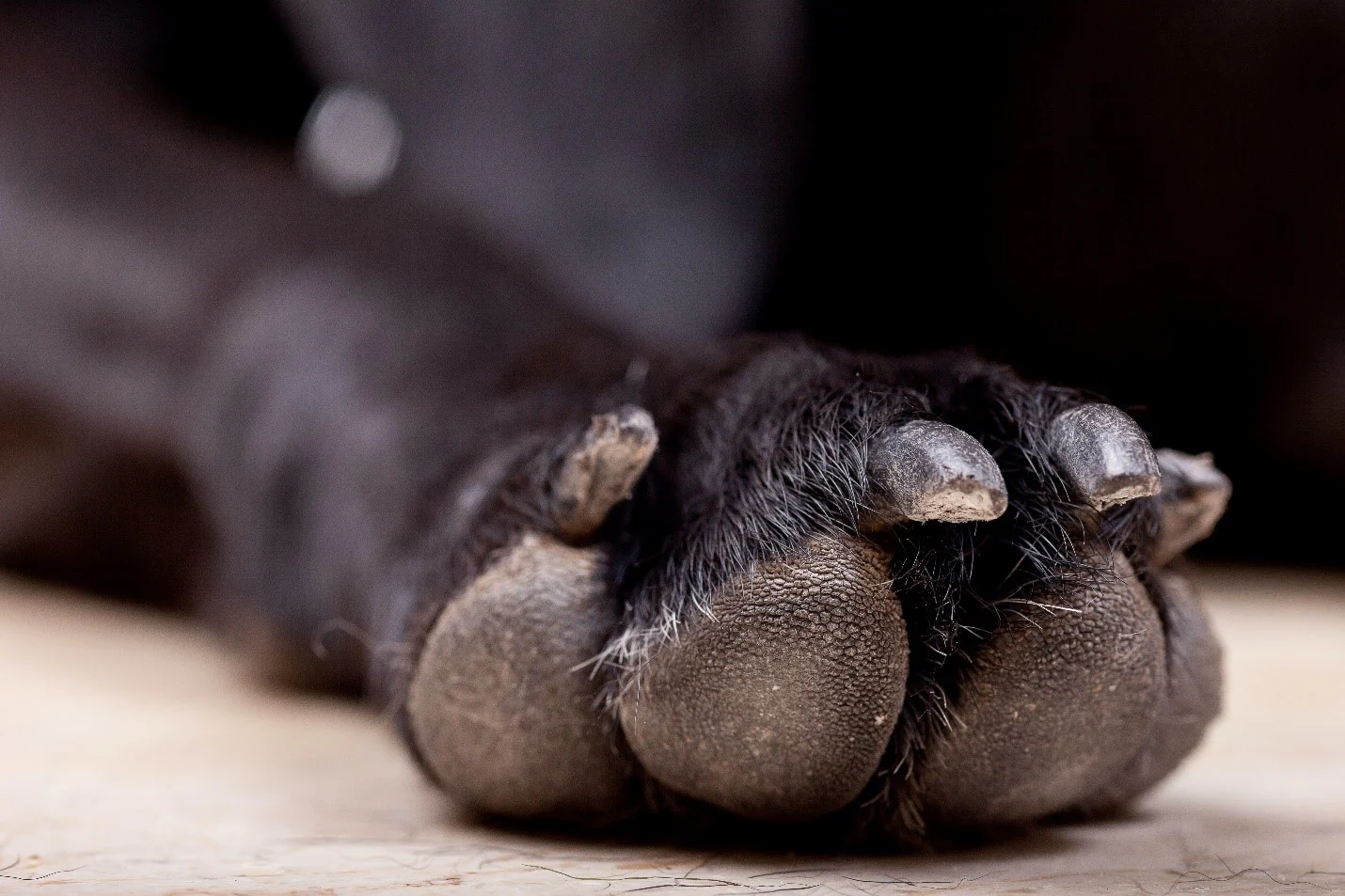
Some changes in movement are easy to see.
Others are more subtle.
Sometimes owners notice that a paw no longer lands where it should.
Owners often say:
“He places the foot strangely.”
“She does not seem sure where to put the paw.”
“The leg moves, but the foot does not land normally.”
That observation matters.
What this can look like
You may notice your dog:
- placing a paw in an unusual position
- taking awkward or inaccurate steps
- stepping too wide or too narrow
- misplacing a foot during walking
- looking less precise during movement
Sometimes the change is brief.
Sometimes it becomes easier to notice over time.
Why this is important
Normal movement depends on more than strength.
The body must also know where each limb is during every step.
Walking requires constant communication between the nervous system, muscles, joints, and spine.
If this process changes, paw placement may also change.
Owners often say:
“The leg moves, but something about the foot looks different.”
That detail is important.
Things worth noticing
Pay attention if:
- the same paw is affected repeatedly
- foot placement becomes less accurate
- your dog appears less coordinated
- walking on uneven ground becomes more difficult
- other movement changes appear as well
Small changes in limb position can reveal important information.
What this may suggest
Abnormal paw placement may sometimes be linked to:
- changes affecting coordination
- altered awareness of limb position
- reduced control of movement
- weakness involving the limb or nervous system
In some dogs, these changes may appear before obvious limping develops.
You do not need to identify the cause.
Noticing the pattern is enough.
When to think more about it
It is reasonable to look closer if:
- the change happens repeatedly
- walking becomes less controlled
- your dog starts stumbling or dragging the feet
- other changes in posture or movement appear
Repeated changes in foot placement usually have a reason.
What owners should avoid
- do not assume it is simply clumsiness
- do not force difficult exercise
- do not ignore gradual changes
- do not give human medication
Careful observation often provides valuable information.
Simple message to remember
If your dog’s paw placement looks different, the body may be finding it harder to control normal movement.
Even small changes in how a foot lands can matter.
What to do next
If the pattern continues or becomes more noticeable, discussing the changes with your vet or seeking independent advice can help clarify what may be happening.
About the author
Dragan Avramović, DVM
Independent advice in small animal surgery and orthopaedics.