

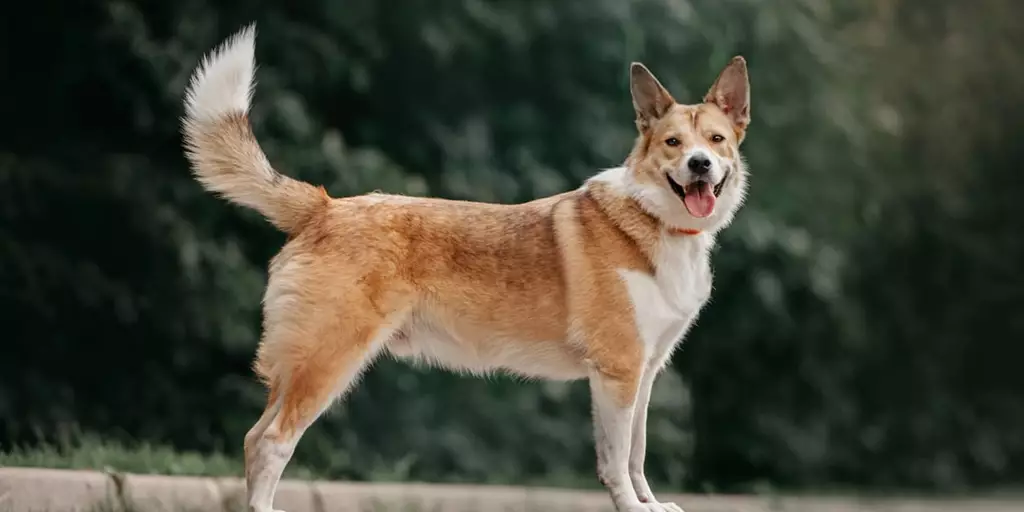
Some owners notice a small change during walks or daily movement.
Not in the legs.
Not in the way the dog walks.
But in the tail.
Owners often say:
“He keeps his tail lower than before.”
“She doesn’t carry it the same way.”
“The tail position has changed.”
That observation matters.
What this can look like
You may notice your dog:
- carrying the tail lower during walks
- holding the tail stiffly
- wagging less than before
- avoiding certain tail movements
- keeping the tail close to the body
Sometimes the change is subtle.
Sometimes it appears suddenly.
Why this is important
The tail is part of the body’s movement and balance system.
Its position is influenced by muscles, posture, the spine, and comfort during movement.
If something becomes uncomfortable,
the tail position may change as part of the body’s response.
Owners often say:
“He still walks normally, but the tail looks different.”
That detail is important.
Things worth noticing
Pay attention if:
- the tail stays low repeatedly
- movement of the tail becomes limited
- your dog avoids wagging normally
- the tail position changes during activity
- other movement changes appear as well
Small postural changes can reveal important information.
What this may suggest
A change in tail position may sometimes be linked to:
- discomfort around the lower back or tail base
- muscle tension or protective posture
- changes affecting movement or balance
- sensitivity involving the spine or nearby structures
You do not need to identify the cause.
Noticing the pattern is enough.
When to think more about it
It is reasonable to look closer if:
- the change continues over time
- the tail remains low or stiff
- your dog avoids normal movement
- other signs appear alongside the tail change
Changes in posture usually happen for a reason.
What owners should avoid
- do not pull or manipulate the tail
- do not repeatedly test the movement
- do not ignore gradual changes
- do not give human medication
Gentle observation is often the most useful first step.
Simple message to remember
If your dog carries its tail differently than before,
the body may be signalling discomfort or a change in movement.
Even small postural changes can matter.
What to do next
If the pattern continues or becomes more noticeable, discussing the changes with your vet or seeking independent advice can help clarify what may be happening.
About the author
Dragan Avramović, DVM
Independent advice in small animal surgery and orthopaedics.