

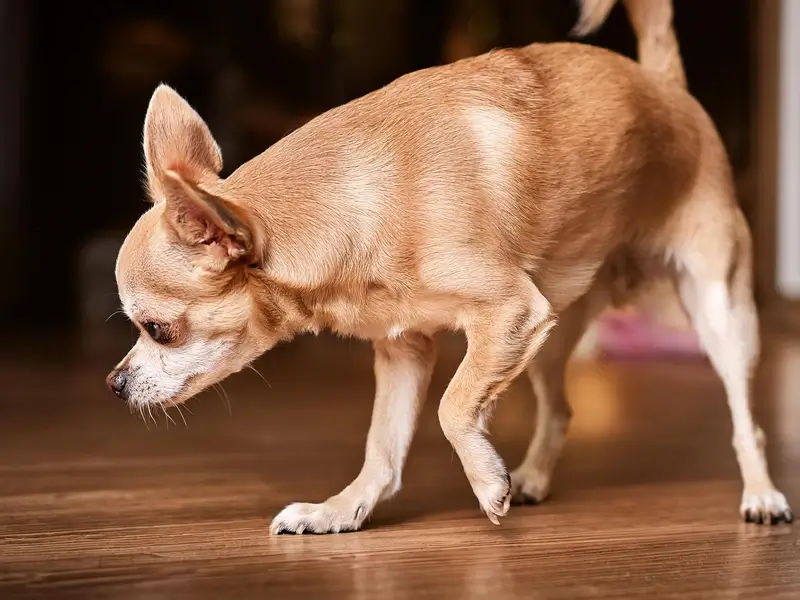
Front leg limping often worries owners more than back leg limping.
It usually looks clearer.
The dog may hold the leg up or shorten the step.
Sometimes it appears suddenly during a normal walk.
Because it looks obvious, people often focus on the paw.
But the change is not always where it seems.
What this can look like
You may notice your dog:
- takes shorter steps on one front leg
- nods the head while walking
- places the paw lightly on the ground
- avoids turns on one side
- shifts weight backwards
- walks slower than usual
Some dogs still use the leg, but carefully.
Why front leg changes are important
Dogs carry more weight on the front part of the body than the back.
Small problems therefore show earlier.
A mild change can look more dramatic than it actually is.
Owners often say:
“He’s limping a lot, but still wants to go out.”
That combination is common.
Changes owners often overlook
Pay attention if:
- limping appears mainly after activity
- the dog rests more during walks
- licking of one leg increases
- movement changes on hard floors
- the head moves up and down while walking
- the problem comes and goes
Not all limping is constant.
What this may suggest
Front leg limping can be linked to:
- discomfort in a joint
- strain in soft tissues
- changes in stability
- altered weight distribution
The exact place is not always obvious from watching.
You do not need to identify it.
You only need to notice that movement has changed.
When to reflect further
It may be reasonable to think more about it if:
- limping lasts more than a couple of days
- it keeps returning after rest
- the dog avoids using the leg
- swelling appears
- activity level changes
Observation comes first. Decisions calmly after.
What owners should avoid
- do not repeatedly test the leg
- do not force exercise
- do not give human pain medication
- do not rely only on temporary improvement
Rest without understanding is not always enough.
Simple message to remember
Front leg limping often looks clear,
but the cause is not always where it seems.
You do not need to find the source.
You only need to recognise the change.
What to do next
If the change persists and you are unsure what it means, a calm discussion with your vet or independent advice can help you decide your next step.
About the author
Dragan Avramović, DVM
Independent advice in small animal surgery and orthopaedics.