

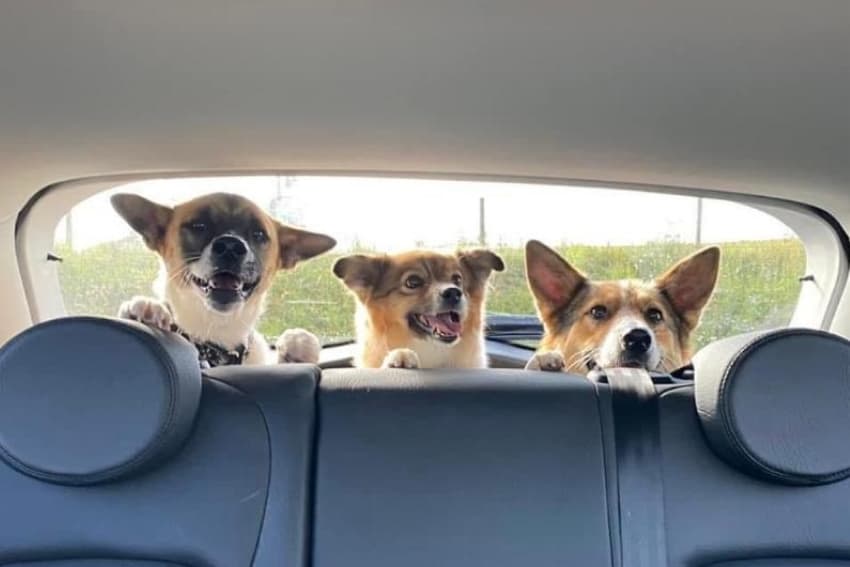
Many owners notice it during an ordinary moment.
The car door opens.
Your dog comes close… then stops.
Maybe looks at you. Maybe walks away.
Later, once lifted in, the dog settles normally.
It is easy to think: “He just doesn’t want to.”
Sometimes that is true.
Sometimes jumping has simply become difficult.
What this can look like
You may notice your dog:
- pauses before jumping
- tries once, then gives up
- circles instead of jumping
- asks to be lifted
- jumps down but avoids jumping up
- hesitates more after a walk
The change often appears gradually.
Why jumping shows change early
Jumping requires:
- strength
- joint movement
- coordination
- confidence
A dog may still walk well on flat ground,
but jumping demands more effort.
Owners often say:
“He walks fine — just won’t jump anymore.”
That detail matters.
Changes worth noticing
Pay attention if:
- hesitation becomes regular
- your dog shifts weight before jumping
- back legs push less strongly
- landing looks careful
- activity slowly decreases
- other movements begin to change
Small changes repeated often are meaningful.
What this may suggest
Reluctance to jump can be linked to:
- discomfort in movement
- reduced stability
- reduced strength
- lack of confidence in the hind legs
You do not need to identify which one.
You only need to notice the difference from before.
When to reflect further
It may be reasonable to think more about it if:
- your dog used to jump easily
- lifting becomes expected
- stairs also become harder
- stiffness appears after rest
- limping begins to appear
Observation first. Decisions calmly after.
What owners should avoid
- do not assume stubborn behaviour
- do not force jumping
- do not suddenly increase exercise
- do not give human pain medication
Helping quietly is better than insisting.
Simple message to remember
If your dog stops jumping into the car,
something in movement has probably changed.
You do not need to rush.
You only need to notice.
What to do next
If the pattern continues and you are unsure what it means, a calm discussion with your vet or independent advice can help you understand your options.
About the author
Dragan Avramović, DVM
Independent advice in small animal surgery and orthopaedics.